Laboratory Equipment Details
Complete information about this device
Device Gallery
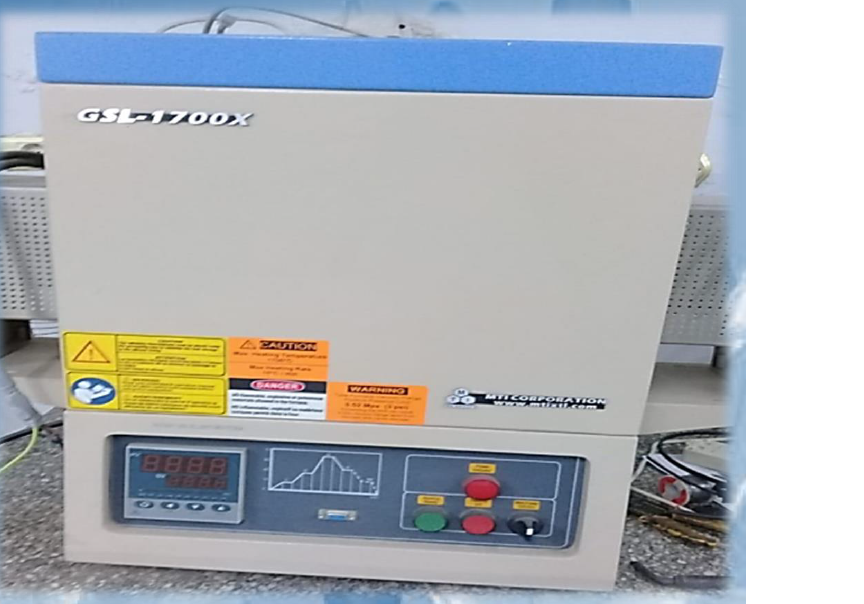
Available
Reservations
0Views
605Overall service quality rating
0/5
Information about devices and laboratories is clear and updated
0/5
The device search interface is effective
0/5
Steps to request the use of a device are clear
0/5
Devices are in good working condition
0/5
Contributes to obtaining accurate research results
0/5
Devices are available at the required times
0/5
Response to inquiries in a timely manner
0/5
Technical support is qualified
0/5
Contributed to the completion of research
0/5
Recommend your colleagues to use the service
0/5
Device Information
Device Name
Lock-in amplifier
Model
0
Units Available
1
Manufacture Year
2010
Manufacturer Website
Description
A lock-in amplifier is a sensitive instrument used to extract signals with a known carrier frequency from noisy environments. It measures the amplitude and phase of AC signals at a specific reference frequency by multiplying the input signal with a reference signal and then applying a low-pass filter, effectively suppressing noise at other frequencies. Lock-in amplifiers are widely used in: Optical measurements (e.g., photodiode detection) Magnetic resonance experiments (e.g., ESR, NMR) Electrical transport studies Vibration and mechanical sensing Material characterization Key features may include dual-phase detection, multiple input channels, built-in signal generators, and computer interfaces for automated data acquisition
Services & Pricing
| Service | Cost |
|---|---|
| 0 | - |
Additional Information
Measurement Principle: Phase-sensitive detection using reference frequency and low-pass filtering to isolate signals in noisy environments. Input Channels: Typically 1–2 analog input channels; some models offer multiple synchronous channels. Frequency Ran